About
Cattle branding is chapping more than just PETA's hideSome chains and vets now oppose practice; ranchers say it's vital
By DIANE JENNINGS / The Dallas Morning News
09/09/2002
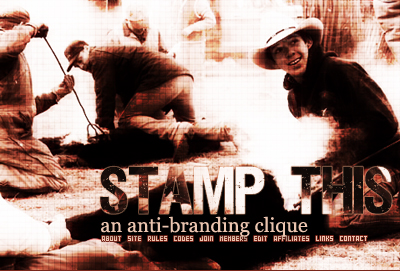
The time-honored tradition of branding livestock is under fire by animal rights advocates, making Texas cattle ranchers who depend on the method to protect their property as uneasy as a herd of cows in a thunderstorm.
"Hot-iron branding constitutes animal abuse," said Bruce Friedrich of the People for the Ethical Treatment of Animals, an animal-rights organization pushing for better living conditions for livestock.
Mr. Friedrich predicts that the practice, which dates back to the days of Spanish settlers in Texas, "will be gone in probably five years."
Ranchers, who do not consider branding abuse, see no other viable alternative for protecting their property from theft. But dismissing the controversy as part of a radical group's extremist agenda is not as easy today as it was in the past.
Concerns about branding are now being echoed by mainstream voices, such as restaurant managers, grocery executives and even veterinarians.
Last year, Burger King sent a letter to suppliers encouraging them "to find pain-free alternatives" to branding, said spokeswoman Laina Hanna. In December, Applebee's restaurants followed suit, asking vendors to consider "not accepting products from suppliers that practice branding of animals."
In October, the National Council of Chain Restaurants and the Food Marketing Institute expect to issue guidelines on a variety of animal-care issues, including branding. The move was prompted, said council president Terrie Dort, by the decision of individual chains such as Burger King to set standards.
Dr. Dustin Dixon, director of food science for Applebee's, who is working with the restaurant and grocery groups, said animal rights have become "much more of an evolving issue over the last couple of years. Animal rights have been more front and center, no question about that."
Issue of pain
The pain caused by branding is the reason the American Veterinary Medical Association, which has more than 67,000 members, suggested several years ago that an alternative to branding be developed.
Still, the association recognizes that "permanent identification of animals is essential in protecting the nation's livestock industry and public health," said Dr. Gail Golab, assistant director of communications.
Texas cattle raisers, who say the pain caused by branding is temporary and minimal, are concerned but not surprised by the questions over branding.
"I'm not particularly surprised by anything if you put PETA in the mix," said John Dudley, president of the Texas and Southwestern Cattle Raisers Association.
Ranchers probably are more interested than anyone else in animal welfare, he said, because their livelihood depends on it.
He disputes Mr. Friedrich's notion that "hot-iron branding is more of a tradition than a necessity."
Ranchers don't brand out of some misplaced homage to the romanticized Western image, he said. "We do, of course, embrace our lifestyle and appreciate those good points about it, [but] there is not much romance left," he said. "We're trying to produce a product."
Taking care of that product includes protecting it from thieves, the primary purpose of branding.
"This is our only form of positive identification of livestock," said Jim Link, director of the ranch management program at Texas Christian University and a longtime rancher. Identification is needed, just as on any other property, because cattle rustling is still a problem. In 2001, about $5 million in livestock and equipment was stolen in Texas and Oklahoma, according to the Cattle Raisers Association. The only viable way to prove ownership is through branding.
Other options
Other methods, such as ear tags, microchips and freeze branding, are impractical for free-roaming cattle, he said. Ear tags can be torn off in rough brush or intentionally removed by thieves; microchips have to be read by a machine and also can be cut out; freeze brands, which bleach the hair, can be easily altered and don't work on light-colored hides.
If he "had my druthers," Mr. Link said, he'd prefer an alternative to branding, because it is time-consuming and he doesn't like to inflict any pain, no matter how minimal or temporary. "But I don't have a viable alternative that I see right now."
The National Cattlemen's Beef Association is working with the restaurant and retail groups in developing animal-care guidelines, said Gary Weber, executive director for regulatory affairs. The cattlemen's stance on branding is that it is "an acceptable means of animal identification. When done properly it's not something that is difficult for the animals to cope with."
Required in some places
Mr. Link said he doesn't expect the animal-rights movement or the retail pressure to have much effect on day-to-day ranching operations because ranchers have little choice. Some Western states, though not Texas, require branding by law, Mr. Link said. And even if government regulations don't mandate it, banks often require branding to insure loans when cattle are posted as collateral.
Mr. Friedrich of PETA acknowledged that the fight to stop branding will be harder than many "because of the legislative hurdles" but said he still is optimistic.
Temple Grandin, associate professor of animal science at Colorado State University, said she hopes improving technology will resolve the issue sooner than anything else.
"One of the things that could get rid of branding is cheap DNA testing. If DNA testing gets down to a couple of dollars a head, you could DNA 'fingerprint' cattle," she said.
In five or 10 years, depending on how quickly technology develops, "I can see it [branding] being phased out," Dr. Grandin said.
Source: here
If you would like to know more about types of branding and their specifics, visit this site.
A step-by-step guide to the process of branding can be found here.